Thursday, November 09, 2006

India's First Internet IPO: Info Edge's Naukri.com

The listing of shares in Info Edge known for its job portal Naukri.com will make history on Nov. 24 for a number of reasons. It will be the first Indian Internet firm to list exclusively on an Indian exchange. Investor demand for each available share exceeded availability by 55 times, during the pre-Initial Public Offering (IPO) auction process, which ran from Oct. 30 to Nov. 2.

Its IPO will be keenly followed by rivals information portal Indiatimes.com and matrimonial site Shaadi.com, which are planning their own stock listings.

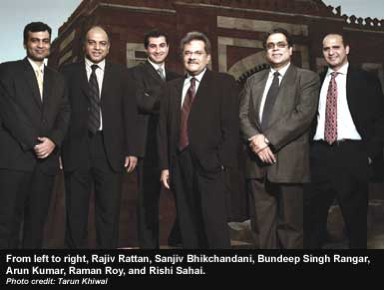
At IndusView, we know Naukri.com’s founder and CEO Sanjeev Bhikchandani well (Sanjeev, fellow IndusView board director Rishi Sahai and I were featured in the Red Herring magazine in June this year). Back then, the Red Herring reported the Bombay Stock Exchange’s benchmark Sensex broke a record 12,000-point high. Recently, it broke 13,000 points for the first time.

Any concerns about the Indian market’s receptiveness to Internet businesses should, by now, have been silenced. That's one reason why Naukri.com opted for an Indian listing in contrast to Sify Ltd and Rediff.Com India Ltd, which trade on the NASDAQ.

Its shares had been priced in the band of Rs. 290 ($6.50) and Rs. 320 ($7.20) a share. Info Edge plans to sell 5.32 million shares, nearly a fifth of its equity base. At the top end of the price band, it will raise about Rs. 170 crore ($38 million), valuing the firm at about $190 million, half that of US-listed Rediff and Sify which have been public since June 2000 and Oct. 1999 respectively.

In the year ending March 2006, Info Edge reported revenue of Rs. 841 million ($19 million) and a net income of Rs. 133 million ($3 million).

Info Edge, via its job portal, is capitalising on the general growth of the Internet in India. A recent report from IAMAI-IMRB estimated that the country was now home to 25 million regular users of the Internet, set to grow to 43 million by March 2008.

VC Attraction

Few things excite venture capitalists more than the possibility of investing at a low price in a company with global disruptive potential that offers an exponential return. Internet start-ups offer one of the best options for high-growth, capital efficient and exitable investments. As India’s Internet user base grows at 25% each year, more Internet companies are being formed to target the online market. Consequently, more funds are being set up to invest in such companies.

After a lull between 2000 and 2004, early-stage companies received venture capital investments worth $482 million across 52 deals last year. This year, investors have taken greater risks by investing money in very early stage companies.

Consequently, they have invested a similar amount as last year in twice the number of companies. In the first six months of 2006, that resulted in $240 million invested in 49 companies in sectors such as online classifieds and travel, mobile and mobile value-added services companies, gaming and telecoms.

Silicon Valley Spearhead

Not surprisingly, Silicon Valley based VC firms are taking the lead. At last count, 44 US-based VCs announced plans to set up India-based funds of an average fund size of $100 million. If successful, that would imply about $4.4 billion in new investment capital would be available for venture investments in India over the next five to six years. That’s more than twice the $2.03 billion total in venture capital and private equity investments in India in 2005.

Taking Indian Purchasing Power Parity (PPP) into consideration, that would be equal to $22 billion worth of investment capital in the US.

Info Edge was Kleiner Perkins Caufield and Byers’ first investment in India. It invested about $5.5 million in May this year along with Sherpalo Ventures, backed by early Google, Inc. investor Ram Shriram. ICICI Venture also owns a stake in Info Edge. It had invested Rs. 7.29 crore ($1.64 million) in 2000.

Recently, Silicon Valley-based VC fund Sequoia Capital merged its India operations with VC Fund WestBridge Capital Partners based in Bangalore. The new merged entity is now called Sequoia Capital India.

Sequoia joins other Silicon Valley funds such as Norwest Venture Partners, Matrix Partners, Benchmark Capital, Draper Fisher Jurvetson, and Greylock Partners that have expanded their presence in India recently.

The Job Ahead

But it’s still going to be an uphill struggle to quickly and efficiently find skills in a country as big as India to fill the gaps opened by these kinds of opportunities. For Info Edge, diversification into other areas – such as online property site 99acres.com and matrimonial site Jeevansathi.com, was a challenge.

While Info Edge’s book building of demand for its IPO has undoubtedly been a success, the true success will lie in a sustained share price and strong after-market support in the weeks after its listing. While diversification helps de-risk its business, a small dip in its core job market business could still have a significant impact on Naukri.com.

That does seem unlikely, however. A recent study conducted by the Confederation of Indian Industry (CII) has revealed that human resource (HR) is the biggest challenge faced by India Inc., particularly at the managerial, production and marketing levels due to the widening demand-supply gap.

With multinationals grabbing Indian CXOs and Indian firms expanding their operations overseas through acquisitions or setting up new facilities, the problem of getting the right people for management, production, marketing and research posts has become an uphill task, thanks to the growing demand for the same set of people by many firms.

Competition Grows

More threatening to Naukri.com, there are a number of competitors such as JobsAhead.com, owned by Monster, Inc. and TimesJobs.com, owned by Bennett, Coleman & Co. Ltd, publisher of India’s largest newspapers The Times of India and The Economic Times. They’re already looking for a piece of the market – and there are certain to be even more aggressive now that everyone’s focused on the IPO. Info Edge’s combined revenue leapt 86% last year – who wouldn’t want a piece of that?

Given the spectacular investor enthusiasm for Naukri.com’s equity, it seems likely that it will attract long-term support beyond the flurry of speculative investment.

We’ll be staying in touch with Sanjeev and monitoring the situation closely, particularly on November 24, when the shares are listed.

The world has just witnessed a landmark moment in India’s commercial history. In fact, with the Sensex breaking its previous record and Info Edge’s IPO book-building process complete, we’ve witnessed two in as many weeks.

Bundeep Singh Rangar
Corporate Website: www.indusview.com
Corporate Publication: www.theindusview.com

Thursday, November 02, 2006

The IndusView Publication, Volume 2, Issue 13

India – UK M&A: The Empire Strikes Back

Indian companies will likely spend more than $10 billion on acquisitions in Europe this year, accounting for almost 90% of their total overseas acquisitions. Europe’s diversity makes it a tough market to crack by organic means alone so Indian firms have taken the acquisition route. They spent $2.68 billion during the first half of 2006 on 32 acquisitions of European firms, i.e. two thirds of the $4 billion spent by Indian companies on 85 overseas acquisitions.

Trade between India and Europe is expected to multiply five times to $100 billion by 2010 from current level of $20 billion, according to industry estimates. Propelling this growth is increasing merger and acquisition activity between companies in the two regions.

The most favored acquisition and investment targets are U.K. companies, helped by a common English language, similar accounting and legal systems and relatively flexible U.K. labor laws. Indian companies invested about $2 billion in the U.K. last financial year, more than twice the previous year. As a clear sign of trend-reversal, it surpassed the investment made by British companies in India.

That figure does not include the latest and largest ever acquisition by an Indian firm: the purchase by India’s Tata Steel Ltd of the U.K.’s top steel maker Corus Group Plc, a company more than three times its size for $8 billion.

Tata Steel’s parent namesake company Tata Sons Ltd, with revenue of $22 billion and equivalent to about 2.8% of the country's GDP, will lead the M&A league table with its acquisition of Corus Group Plc. The Tata Group had previously acquired the U.K.-based Tetley Group, then the world’s largest manufacturer of tea, for $407 million in February 2000.

The Corus acquisition will give Tata Steel the size and scale to be globally competitive in a consolidating steel industry. Tata Steel will become the world's fifth largest steel producer with a capacity of about 26 million tons and combined sales of $24.4 billion.


India - U.K. Trade: The Corridor Widens

The growing bilateral trade between the U.K. and India became clear this year when the two countries emerged as the third largest overseas investors in each other. There has been almost three-fold increase in the number of projects announced by Indian companies in the U.K. in first six months of 2006. The number of U.K. projects financed by Indian companies doubled to 76 creating 1,449 new jobs. The number of Indian companies that started U.K. operations grew by 23% last year.

To add to that, more than 500 Indian companies have a presence in London, of which 30 companies have listed shares on the London Stock Exchange. That’s greater than the total number of Indian companies listed on the New York Stock Exchange (NYSE) and NASDAQ combined.

Such progressive trends prompted the third annual summit between the Indian Prime Minister Manmohan Singh and the Prime Minister of U.K. Tony Blair in London on October 10, 2006. Government and trade bodies can do more, however, to encourage bilateral business.

While Indian industries such as information technology, pharmaceuticals and engineering have received significant investments, there are sectors such as infrastructure, energy and real estate that offer investment opportunities to the extent of $150 billion, $73 billion and $50 billion respectively over the next five years.

Further, if Indian companies could simultaneously list shares on both the Bombay and London Stock Exchanges, for example, access to capital and investment opportunities would be better for both sides. It could make London to India what Hong Kong is to China.

Stock Market: Growth Factored In

With corporate India currently announcing its results for the second quarter of the current fiscal year, investor apprehensions about the valuation of public companies seem to have been put to rest and their confidence strengthened.

The top five Indian IT services companies, namely Tata Consultancy Services, Infosys Technologies, Wipro Ltd, Satyam Computer Services and HCL Technologies produced strong quarterly numbers, better than what analysts predicted. The companies reported an average growth of 39% in revenue and 41% in net income during the second quarter ended September 2006.

Growth expectations are reflected in India’s IT stocks. Take India’s top four IT services companies: TCS, Wipro, Infosys and Cognizant Technology Solutions. They have combined annual revenue of $11 billion and an aggregate market capitalization of $73 billion. That dwarfs the top five U.S. companies Accenture, Amdocs Ltd, Computer Sciences Corporation and Electronic Data Systems Corporation and Europe’s biggest IT services company CapGemini put together, which have total annual revenue of $67 billion and a combined market cap of $65 billion.

This growth is not limited to the tier-1 IT companies only. Some of the mid-size IT services companies are displaying similar growth. We discuss these results in detail in our Special Report.

India’s growth is spread beyond the IT industry. Reliance Industries Ltd, a diversified manufacturing company which makes products ranging from chemicals to textiles to become India's most valuable firm with a market cap of $37 billion, grew better-than-expected 37% in sales and 9% in net income during the quarter. ICICI Bank, India’s largest private sector bank, reported a 30% surge in profit. Grasim Industries Ltd, one of the country’s largest cement producers, doubled its profit in the second quarter. Ranbaxy Laboratories Ltd, India’s largest pharmaceuticals company by sales, increased its profit by more than six times and sales by 26%. Cipla Ltd, the second largest drug-maker, registered 47% growth in its profit.

During the first quarter ended June 2006, the companies included in the Bombay Stock Exchange’s benchmark index Sensex, grew about 25% in profit and about 30% in sales compared with the same quarter previous year.

A clear consequence of this growth, buoyed by increasing M&A activity, is that India’s mid-sized companies are becoming large cap stocks. And the existing large ones are becoming truly global.


Bundeep Singh Rangar
Chairman, IndusView
Bundeep.Rangar@IndusView.com
www.indusview.com

Wednesday, September 13, 2006

Why India? Why Now?

Fast becoming Europe's "Mr. India", Bundeep Singh Rangar co-founded IndusView Advisors with friends Manish Gupta and Rishi Sahai. Now, he is set to launch a $100 million plus Europe-India Investment Fund called Amaya Venture.

When will India build its first venture-funded billion dollar company ? Are investor expectations inflated? How can European companies better exploit the India opportunity? Mr. Rangar talks to InnovationBlog about Indian investment, politics, opportunity and growth.

Bundeep Singh Rangar, IndusView and Amaya Venture (Q2, 2006)

Bundeep Singh Rangar
www.indusview.com
www.theindusview.com

Friday, July 14, 2006

India 3rd Largest Investor in the UK

Indian investments in UK to continue
India Infoline News Service / Mumbai Jul 06, 2006 13:32

India focused corporate advisory firm IndusView, says, the enormous growth in Indian investment in the UK, announced by UK Trade and Investment, will continue to grow in the years ahead.

The enormous growth in Indian investment in the UK, announced by UK Trade and Investment, will continue to grow in the years ahead. UK companies, however, are increasingly missing out on investment and growth opportunities in India, says India focused corporate advisory firm IndusView.

India is the third largest investor in U.K. according to the ‘U.K. Inward Investment 2005-06’ report by UK Trade & Investment (UKTI). The report shows the number of UK projects financed by Indian companies doubled to 76, with Indian investment up 111%, creating 1,449 new jobs. As a clear sign of trend-reversal, the amount of money invested in the U.K. by Indian companies had topped the investment made by British companies in India for the last financial year.

India had already overtaken China, and was running neck and neck with Japan, based on the performance of the first three quarters of the fiscal year, The league tables are calculated on the basis of total direct investment and number of jobs created as a result.

More than 430 Indian companies are already based in London. The number of Indian companies that started U.K. operations grew by 23% last year.

"India has historic ties to Britain. Both countries have similar legal, accounting, finance and judicial systems,” said IndusView’s Chairman Bundeep Singh Rangar. “The English language and Parliamentary democracy are as Indian as they are English. It should surprise no one that Indian companies now invest so heavily in the UK. There is a truly dynamic and exciting relationship between Indian and UK business.”

IT remains the dominant sector for Indian investment. India now has two companies in the UK top 40 IT companies and is expected to have at least one in the top 25 within the next five years. In the last year there was also strong growth in pharmaceuticals and engineering. Looking forward, IndusView predicts cross-border deals in telecoms, software, animation, media, automotive, engineering and professional services firms to increase in the next fiscal year.

The U.K. is not only the U.K. where India Investors are putting their money. Netherlands is another destination for Indian overseas investors. About $244 million of Indian investments were approved for the Netherlands during the first nine months of the financial year 2005-06.

“Britain needs to keep its competitive edge vis-à-vis other European countries when it comes to its business relationship with India. European companies are moving aggressively to capitalise on India’s economic growth. The U.K. government cannot afford to sit idly by if it wants Britain to remain a global economic force,” said Rangar.

At present a number of key Indian companies are growing overseas and focusing on the UK. India is no longer simply a destination for labour solutions and outsourcing. The shift is toward outward expansion is a sign of increased economic confidence of the world’s second-fastest growing economy.

With the Indian economic juggernaut gathering greater momentum, now is the time for Britain’s companies to participate and grow. Today’s announcement is indicative of a changing global economic reality.

“Our clients are from across sectors including retail, financial services, software, telecoms services all want to be in India yesterday. But gaining access has been a historical problem for British business. The U.K. government and U.K.’s companies need to be more focused on how to address that market, because the wealth of opportunities that are present today are not going to be there much longer.”

The UK Government could be more focused on addressing the Indian market, creating a unified point of entry for British businesses.

Bundeep Singh Rangar
www.indusview.com

Thursday, March 09, 2006

The Indus View Publication, Volume 2 Issue 2

If the stock market were a bellwether for the economy, one word would describe India’s economy: “sizzling.”

The Mumbai Stock Exchange Sensitive index, or Sensex, crossed the psychologically important level of 10,000 for the first time in the history of Indian stock market. Moreover, it held it’s ground.

Hot Economy
The economy continues to grow as higher wages spur spending. India's middle class has tripled to 300 million, or about a third of the population, in the past two decades. The National Council for Applied Economic Research qualifies such people as those earning between $4,545 and $23,000 a year. Bank loans to companies and individuals rose 32 percent in the six months ended Sept. 30, the biggest increase since the central bank started collecting data in 1971.

The trend toward offshoring of software development continues unabated. An emerging $1.25 billion market is predicted for development of animation at $950 million and gaming software at $300 million in four year's time. That's according to NASSCOM, the trade body for India's 900 IT companies.

Personal computer sales in India registered a growth of 36% at 2.3 million units during the first half of the current fiscal year ending March 2006. That led the Manufacturers Association of Information Technology (MAIT), the representative body of computer manufacturing companies, to revise its annual projections to 4.7 million units from 4.25 million, for this fiscal year.

To top it off, India added a record 4.5 million new mobile phone subscribers in December 2005 following the abolition of charges for incoming calls by many operators. Analysts predict new phone subscribers will surpass 5 million new accounts per month at some point this year, on par or in excess of the absolute growth in China. India added about 30 million new telephone users during the year 2005, the highest addition to date in any single year. About 4.9 million users were added in December 2005 alone, of which 4.5 million were mobile phone users, taking the total telecom subscriber base to 125 million. The tele-density has gone up to 11.43% compared to 8.6% in December 2004

Stock Index
India's key “Sensex” stock index will probably climb for a fifth straight year in 2006 as listed companies' earnings improve and overseas investors pump more money in to the countries stock market.

The move to 10,00 from 9,000 in just 48 days, raises the question as to whether such a sharp rise is justified.

That question, however, has been posed ever since the Sensex touched the mark of 7,000 on June 20, 2005.

Valuation Concerns
Some analysts have expressed concern about the “stretched valuations” - the notion that the current price to equity ratio of 18.36 for the Sensex makes its stocks more expensive than other emerging markets. Morgan Stanley’s MSCI Emerging Markets Index is currently trading at 14.5 times, cheaper than Sensex. It is interesting to note that while the Sensex moved from 9390 on January 02, 2006 to 10,000 on January 06, 2006, the P/E ratio of the Sensex came down from 18.60 to 18.36 as the earnings growth in the quarter ending December 2005 was factored in.

Citigroup Inc. rated Indian shares as “overvalued” last month and forecast the Sensex to slide in 2006 as earnings growth slows. Merrill Lynch & Co.'s New York-based strategists termed India as the most expensive emerging market in November 2005 and recommended investors to sell Indian stocks cautioning about the possibility of fund inflow getting slow. The fact is, however, that the net foreign funds flow of $805.10 million in January 2006, and $550.40 million in the first five trading days of February 2006, were the main drivers for the Sensex to reach 10,000. The Indian market attracted a record $10.6 billion of funds from foreign investors in 2005, second only to Taiwan in Asia, excluding Japan. The local funds also have collected more than $2 billion in the month January 2006 alone through their new fund offers (NFOs).

Foreign Investors
Overseas investors have bought $572.2 million worth of shares this year, according to the latest figures from the Securities & Exchange Board of India.

India is seen to be a liquidity driven market now with the rise in capital markets being a function of India’s fast growing economy, the world’s second fastest – and rising corporate earnings.

India's $665 billion economy is growing at a pace that is second only to China among the world's 20 largest economies. The Gross Domestic Product (GDP) growth rate was 8% from a year earlier in the quarter ended September 30, 2005 and is estimated to grow by 8.1% for the fiscal year 2005-06 ending March 2006 compared with 7.5% in the previous fiscal year. On the corporate earnings side, a study of 200 stocks done by Kotak Securities showed an average of 23% earnings growth in the quarter to December 2005. Expectations are even higher, as Indian companies have scaled up their capabilities and enhanced their efficiencies. The scale of corporate expansions was reflected in the Bank loans to companies and individuals that rose 32% in the six months ended Sept. 2005, the biggest increase since 1971. The economic reform process continues - the government recently opened the retail sector for foreign direct investment, albeit with restrictions.

Correction or Justification
Many analysts now expect a correction in the market. Macro-level changes such as a sharp increase in oil prices or a regional conflict notwithstanding, there is little reason for the Indian markets falling much below these levels. The upside, on the other hand, may also be limited and it’s unlikely to generate the 40% return seen in 2005. This does mean, however, that if the market keeps the pace with the earnings growth - a 15%-20% year-on-year growth - is well justified.

Bundeep Singh Rangar
Chairman, IndusView

SECTIONS

Deal Watch
January 2005 was the month of media, in terms of M&A deals as well as public issues. Jagaran Prakashan, the publisher of India’s largest Hindi news paper, Multiplex chain Inox Leisure and FM Radio company Entertainment Network (India) Ltd entered the primary market to raise capital. A consortium of three companies including Malaysian broadcaster Astro and Indian TV news broadcaster New Delhi Television (NDTV) bought Radio Today that runs FM radio channel under brand name Red FM.
more

Global Outlook: Vinod Dham
What are the trends to watch out for in the year 2006? Tech pioneer Vinod Dham believes that WiMax will emerge as the new public utility.
more

India Outlook: IDC Top 10 Predictions
India will continue to be the fastest-growing domestic IT market in the AP region in 2006, forecasted IDC in its recent report on the Indian IT market. It has also predicted that 2006 would be the year of digital home revolution in India.
more

New Opportunities: Animation & Gaming
Animation & Gaming is an opportunity worth $1.25 billion for India. This is the conclusion of the latest report on Animation and Gaming industry in India by NASSCOM, 900-member industry body representative of India's information technology companies.
more

TMT Radar
NASSCOM has launched National Skill Registry (NSR), the first initiative of its kind in the world, to create a nation-wide database of Indian Information Technology (IT) professionals. It will help the companies to hire professionals with a clean record to ensure data security. Under the scheme, resume of the professional opting to register with NSR will be verified by NASSCOM at the time of registry, so that a company willing to hire the person will not have to do the exercise on its own.
more

Policy Watch
Several Indian states are competing against each other to offer more and more incentives to IT companies to attract new projects of IT companies. Kerala has allotted 50 acres of land to Infosys in the new Special Economic Zone (SEZ) in the state capital of Thiruvanantpuram. And of course, the race between Karnataka vs Andhra Pradesh continues, as Andhra Pradesh government is considering promoting 7-8 SEZs exclusively for IT and It Enabled Services.
more

Corporate Monitor
Hardware manufacturing is gaining pace in India. Dell Computers, the largest computer maker of the world is considering to set up a manufacturing unit in India. SemIndia, a company formed by non-resident Indian IT professionals turned entrepreneurs that announced setting up a chip-plant by partnering with AMD, has announced another project of Assembly-Test-Mark-Pack (ATMP) plant in India, with $75 million investment in the first phase. The trend of Indian telecom companies outsourcing their network operations got stronger with Hutch-Essar selecting Nokia for maintaining their GSM mobile network in a $350 million deal.
more

Sector Focus: Resurging FM Radio
The FM Radio market in India is set to explode from 22 FM stations in 12 cities to 300 stations in 91 cities across the country. The Government of India has just concluded the five rounds of bidding for 10-year FM Radio licenses. The Indus View estimates that the market of FM Radio in India will grow to $125 million in 2010 from $25 million in 2005.
more

Sector Focus: Q3 Financial Results of IT Sector
The top-4 companies of the IT sector maintained a high growth in the third quarter. While Tata Consultancy Services (TCS) and Infosys Technologies posted results in line with market expectations, Wipro and Satyam Computer Services came with outstanding numbers way ahead of what analysts had predicted.
more

Company Watch: HCL Technologies
Moving from the status of “distant fifth” largest IT company to a member of “the big league of Top-5” IT companies of India seems to be the immediate target of HCL Technologies. It recently won a $330 million outsourcing deal from the top UK consumer-electronics retailer DSG international Plc, which is claimed to be the largest outsourcing deal for any Indian IT company.
more

People Watch: Azim Premji
The man who transformed the Wipro from a small vegetable oil company to $1.35 billion IT company had to come back to the driving seat of the company last August at the age when people opt for a retired life. After the exit of Wipro Vice-chairman and CEO Vivek Paul, Chairman Azim Premji resumed the role of executive head again, though without officially becoming the CEO. And the latest financial results of Wipro tell us why he is one of the most admired persons of the Indian IT industry.
more

Market Watch: Sensex Surpasses Highs of 2005; Crosses 10,000 in February
Sensex, the benchmark index of the Bombay Stock Exchange (BSE), reached the 10,000 mark for the first time on February 06, 2006 after playing hide and seek with this mark in the last week of January. Even at these high levels, the buying support from the Foreign Institutional Investors (FIIs) continues as earlier.
more

ABOUT INDUS VIEW
Indus View advises multinational companies on business opportunities emanating from India’s fast growing economy. It de-risks the growth ambitions of multinational companies operating as a trusted partner that understands the complexities of the Indian market and the commercial drivers of western enterprises.

IndusView provides strategic insight, competitive intelligence, research and execution capabilities to manage large vendor and corporate finance transactions. More at www.IndusView.com

Tuesday, November 22, 2005

Launch of The Indus View Publication

Welcome to the inaugural edition of The Indus View. This publication is a product of IndusView Ltd, an investment and advisory firm focused exclusively on opportunities in the Indian marketplace.

The Indian economy is set to grow at the rate of about 7% over the next few years. It is now the world’s second-fastest growing one after China. In terms of purchasing power parity, it is the world’s fourth largest economy with a 300 million strong middle class. With two-thirds of its population still under 35 years of age, it offers unprecedented opportunities for investment returns in the near future.

Historically, India and China have contributed a quarter and a third of world economic output respectively. India’s Prime Minister Manmohan Singh presented this historic context in a speech this July at England’s Oxford University, where he earned his doctorate in economics in 1962:

“In 1700, India’s share of world economic output was 23.6 percent, larger than the combined economic output (23.3 percent) of the whole of Europe. By Independence (in 1947), after nearly 200 years of British rule, India’s share of the world's economy had shrunk to just 3.8 percent while Britain's alone had risen to nearly 25 percent.”

Colonialism resulted in a historic anomaly; a correction of which we are witnessing in our lifetime.

Goldman Sachs claims that India could be the world’s third largest economy by 2032. Deutsche Bank states this could happen by 2020 if economic reforms were pursued more aggressively.

Regardless of the actual date, one thing is for sure. India will become a powerhouse during our lifetime making strides each year toward become a fully developed economy. What happened over many decades in the West will happen within the next two decades in India.

Not surprisingly, we’re seeing growth in various sectors in India. While the well-publicized Information Technology and IT-enabled services industries will grow 34 percent this year, less known is that the automotive components industry will grow 29 percent, telecoms 22 percent, retail financial services 21 percent and media 18 percent.

The Indus View publication is designed to help you put a finger on the pulse of economic change and corporate activity in India. We’ve been at the forefront of this change for many years. We wish to share that excitement with you.

Yours sincerely,

Bundeep Singh Rangar

Manish Gupta

Rishi Sahai

Saurabh Srivastava


Founding Members of IndusView Ltd

Wednesday, October 12, 2005

Skype: Reflections for European Venture Capital

In a few days time, most of Europe’s technology-oriented venture capital leaders will be gathered in Athens along with their U.S. and Asian counterparts and the heads of top global technology companies at the European Technology Roundtable Exhibition (ETRE).

The year’s most successful European venture-backed exit, Skype, will be high on the agenda with its co-founder and CEO Niklas Zennstrom making a keynote.

Stop Press. European VCs will be discussing Europe’s most successful exit? Correction – European VCs will be discussing Silicon Valley’s most successful exit.

The reason for the rectification is quite simple. It was the Draper juggernaut under Tim Draper and Howard Hartenbaum that made Skype a phenomenal VC investment. This was classic venture investing that’s made Silicon Valley the mecca of venture capital today.

This is not to take away the critical participation of European VC firms like Danny Rimer’s Index Ventures and Mark Tluszcz’s Mangrove Capital Partners or a pivotal role we played at Ariadne Capital in its early days. But I also give credit where it’s due – if it weren’t for all-singing and dancing Tim Draper who put Skype’s intrinsic disruptive technology on steroids, Skype would have been a “nice, interesting – and small - European company proving that it make early, if only small, profit.”

When I first met Niklas Zennstrom on Day 2 of his arrival in London in the fall of 2003 following an introduction by Howard, we discussed the self-defeating process of most European VC analysis.

The calculation they made followed a method similar to the two highlighted below:

1. Calculate a value for the company today based on a 5-year discounted cash flow analysis with a 25% discount rate. Do a Net Present Value and Terminal Value calculation and see if you can get the IRR on an investment our Fund promised to our LPs ; or
2. Rate the company from 1-5 for each of the following: management team, market opportunity, technology robustness, defensibility and intellectual property, sales and growth strategy, profit horizon, etc. If it gets a median score above 3.5, take another look at it.

There’s nothing inherently wrong with either analysis – but they remain a sub-set of what’s required to evaluate an early stage deal for its true future value. If early-stage technology investments were so predictable for their returns, they would be an asset class indeed.

In “Beyond the J-Curve,” Thomas Meyer and Pierre-Yves Mathonet state that an asset class is a group of investments where they have similar risk and return but are different from those of other asset classes. Skype failed the narrow tests indicated above used by most European VCs. Its P2P technology was deemed not robust enough and the founders’ Kazaa past was seen negatively. And they questioned whether it would ever make money. Yet, Niklas’s (and co-founder Janus Friis’s) return to investors has been way out of the league of all early stage 2003 investments worldwide.

Skype is a thunderous reminder to European VCs of the beta value of VC returns when compared with a basket of European VC investments. The historic share price of UK VC firm 3i’s public stock perhaps serves as the best benchmark against which to measure a European venture investment return. Be my guest, go ahead and do a calculation!

The reminder here -- it’s time for us to be in the Venture business, not just the Fund management business.

European VCs might want to sit down and analyse why it took a Silicon Valley VC to spot and deliver on that opportunity in their own backyard.

A few European VCs did have a chance to see Skype in its embryonic form. Their decision not to invest came down to a fundamentally different approach to investing. In contrast to Niklas’s experience in Europe, his dealings with Silicon Valley VCs (and those with offices in Europe such as Accel and Benchmark) were remarkably different.

They generally follow three logically inductive phases of thinking:

Phase I of Thinking

Does the company have a simple, easy-to-use product that can be easily adopted by consumers? Can this product be marketed directly to consumers so that its channel to market is not dependent on clunky corporates? Does the product fulfil a basic modern human need that users get excited about and tell others about and therefore, create a “viral” effect? If the technical, product development and market strategy are executed well such that it achieves scale and mass adoption, can it make lots of money through “economies of scale” once a “purchase price/revenue-profit model” switch is flicked on?

An introduction by me between Niklas and Sabeer Bhatia, an investor in Ariadne Capital and another example of an entrepreneur backed by the Draper juggernaut and vision of “viral marketing” leading to its Hotmail success, led to a fascinating meeting between Sabeer, Niklas and myself in the spring of 2004. While the contents of that conversation remain confidential, it confirmed that Niklas had gotten the right investor DNA on board.

Phase II of Thinking

What’s the cost of carrying the company until the point that the “switch is flicked on?” Do we, i.e. the VC, have the pockets to support it, the vision to encourage it and the networks to propagate it? Will the company’s product be so disruptive that its true value might be a calculation of money saved at the bottom line for doing the same utility using today’s technology rather than just money made at the top line at some point in the future?

I can hear Niklas’s voice telling me how Tim pushed them toward viral adoption and minutes of voice traffic rather than a false economy of early profit.

Phase III of Thinking

Do we, i.e. the VC, have the networks among decision makers in large acquisitive corporations that will value the company by calculating how its own cost of building the start-up’s new product, acquiring its customer base, scale, reach (particularly in new markets and demographs), traffic and brand will vastly outweigh the price of purchasing the start-up today. And that upon acquiring the start-up, can it flick on its own “much bigger switch” (i.e. revenue model) and see a much greater generation of revenue and profit? That’s the trade-sale argument to be made and won. And that will give a start-up today a multi-billion valuation tomorrow rather than just one worth tens of millions.

The proof of that lies in the spectacular $2.5 billion-$4.1 billion exit of Skype to eBay.

Many European VCs like to believe that they do operate and “think” this way. Evidence suggests otherwise. Not counting U.S. VC firms in Europe, very few actually do. Maisy Ng of Add Partners, Ajay Chowdhury of IDG Ventures and Richard Irving of Pond Ventures come to mind, among others such as Index and Mangrove.

In Skype’s case, European VCs did bring value. Index brought in a critical Cisco relationship and Mangrove did critical early due diligence that led to an investment. Working with Skype from its early days, we at Ariadne Capital did some of its critical early business development deals that led to its software being bundled with headsets and carrier agreements with PSTN operators that allowed for Skype In and Skype Out to materialise. We also placed four key individuals in an early team.

But we followed the Silicon Valley VC lead. By the time Draper invested, almost every European VC wanted to put their money in too. Why did Europe’s VC’s not take the lead in the first place? This was after all, Europe’s biggest venture-backed exit, right?

Perhaps that question ought to be pondered at this year’s ETRE. We might even get an honest answer.

Sunday, October 09, 2005

Indian VC Investments Total Record $528 Mln in Q3 2005

India’s venture capital and private equity market hit a record high in the third quarter this year with more than half a billion dollars in new investments, according to information provider Venture Intelligence India. The six times increase over the same quarter last year indicates growing investor interest in the world’s second fastest growing economy.

A total of $528 million was invested in 28 companies during July to Sept. 2005 compared with $90 million in eight companies during the same period last year. Late stage investments dominated, including 15 Private Investments in Public Enterprises (PIPEs). IT and IT-enabled service (ITES) companies won new favor with six investments totaling $55 million. Eighteen companies raised $10 million or more.

With Goldman Sachs predicting India’s economy to become the world’s third largest by 2032 and Deutsche Bank stating that target might be achieved by 2020 if economic reforms were pursued more aggressively, it’s easy to see the attractiveness of the Indian market among venture capitalists. India’s GDP is expected to grow 7.2 percent this year, the second fastest after China that’s expected to grow 8.5 percent, according to the United Nations Economic and Social Commission for Asia and the Pacific (ESCAP).

India’s high growth sectors include the IT and ITES industries predicted to grow 34 percent this year, followed by the automotive industry at 29 percent, telecoms at 22 percent and media at 18 percent, according to New Delhi-based corporate finance advisory firm IndusView Advisors Private Ltd.

“The Indian VC industry is still in its infancy and a lot of growth still lies ahead,” said Saurabh Srivastava, Chairman of the Indian Venture Capital Association (IVCA). “We’re still just making baby noises on the global stage.”

Venture capital and private equity investments represent only 0.15 percent of India’s GDP, compared with 0.28 percent in Europe and 0.54 percent in North America, according to Pricewaterhouse Coopers.

The largest investment during the quarter was $100 million by Newbridge Capital in truck financing company Shriram Holdings based in Chennai. The second largest deal was ICICI Venture’s $59.8 million buyout of Mumbai-based Associated Cement Companies, the first buyout of a publicly-listed manufacturing firm. Two investments of $45 million tied for third place. This included U.K. venture firm 3i’s first Indian investment into Mumbai-based entertainment software firm Nimbus Communications.

VCs also enjoyed 11 exits during this period, including three public listings. Newspaper publisher HT Media’s sold $86 million worth of stock. Its Initial Public Offering, subscribed 18 times available shares, was the largest venture-backed IPO during the quarter. It had raised $45 million in two financing rounds from Henderson and CIFC (Citigroup) in 2003 and 2004. Other IPOs included financial services firm IL&FS Investsmart backed by Japanese VC Softbank and U.S. stock broking firm E*Trade, Inc. and telecom research and development services firm Sasken Communication Technologies that had been invested in by Intel Capital, Nokia Growth Partners, New Enterprise Associates and Nortel Networks.

Mergers and acquisitions were led by Essar Group’s $1.56 billion purchase of mobile phone services company BPL Communications and Oracle Corp.’s $593 million purchase of Citigroup Venture Capital’s (CVC) 41 percent stake in banking software firm i-flex Solutions. CVC had invested just $400,000 in the firm more than a decade ago.

Exits earlier this year of Indiabulls, Yes Bank, Suzlon Energy and Indiagames made Ashish Dhawan’s ChrysCap and Saurabh Srivastava’s Infinity Venture the top two performing vintage 1999-2000 Indian funds. Both have embarked on raising new funds, along with other survivors of the previous boom in venture investment in India in 2000 when almost $1.2 billion was invested.

The raising of new funds seems well timed as investment and exit activities have generated heightened interest in India among potential Limited Partners and VCs alike. Draper Fisher Jurvetson announced a $200 million Indian fund earlier this month joining other Silicon Valley VCs in India such as Sequoia Capital and Bessemer Venture Partners. More than $3 billion in new capital is expected to be committed to Indian venture capital firms this year, according to the IVCA.

Indian funds already closed this year include ILFS’s $125 million Leveraged India Fund, the $200 million Westbridge Capital II, $425 million Actis India II and $150 million GW Capital II funds. These do not include India-specific buyout funds such as Carlyle, Blackstone and KKR – each earmarking a $1 billion or more toward India.

Tuesday, May 24, 2005

India's Mobile Market Miracle


When the Chairman & MD of India’s top cellular phone company Bharti Tele-Ventures, said to me in his New Delhi office, “I want us to be 12-18 months behind the rest of the world mobile phone market,” that took me by surprise.

For those of us in the early stage technology business, this was anathema! No first mover advantage, no creation of barriers to entry?

But Sunil Mittal knows the dynamics of India’s telecoms industry. In 15 years, his $10 billion company has grabbed 20 percent of India’s booming cellular market.

India works differently, he said. India’s telecoms market is not about being innovative with technology. It’s about deploying technology at a low enough price point that makes it mass market and avoiding the premium associated with early adoption of technology products.

That formula's working.

India has the lowest national call rate in the world – 2 cents a minute anywhere, anytime, across any cellular network. That’s fuelling a market growing by 2 million new subscribers a month. It will have 75 million subscribers by the end of this year from nearly 60 million, according to the Telecom Regulatory Authority of India.

India is, quite simply, all about volume. That’s why the mass market is all important.

When Reliance Infocomm sparked the “mobile phone revolution” in India, it had one simple premise. Make a phone call cheaper than the cost of mailing a postcard – a long-time favorite means of mass offline communication.

Overnight, India went from a slow-growing market to the world’s fastest growing mobile phone market of this magnitude. So much so that Nokia is undertaking a venture in India that it no longer does in the western world – the setting up a manufacturing plant.

The telecoms growth has spurned a host of ‘ecosystem’ businesses. You don’t hear a phone ringing when you call a third party. Instead, you might find yourself listening to a ring tone of a Cold Play song, a bhangra tune or Martin Luther King Jr.’s “I Have a Dream” speech. Phones have been given personalities by their owners and you experience it from the moment you ring it. Some clever entrepreneur supplies the carriers with the outsourced service – which has become another profit centre in India’s mobile value chain.

Telcos are happy to outsource everything except for their customer relationship, traffic and network management. If they want to add a voicemail feature, that’s supplied by Hotmail founder Sabeer Bhatia’s company, Navin Communications.

Even payment procedures are outsourced. This time to the subscribers themselves! If you’re looking to top up your mobile phone, pay cash to any other subscriber on your network and he or she can SMS you credits worth minutes and text and multi-media messages. That’s peer-to-peer payments with real value!

Add to this growth, a huge demand for content. That's easily met by Bollywood, which makes four times as many movies as Hollywood each year. Turbo-charged by the mobile market, the Indian media and entertainment market is growing at an annual rate of 20 percent according to Ernest & Young. The mobile content layer is growing rich in Bollywood-based ring tones, wallpapers, cartoons and games.

Investors are flocking to the market. Bharti Tele-Ventures gave its investor Warburg Pincus a near 6X return on its $300 million investment. That’s cash out of the business already and doesn’t include the stake it still holds in the now public company.

Other investors in the market range from Singapore Telecom, Hutchison and European VCs such as New Media SPARK and Argo Global Capital. Expect more to follow soon.

Wednesday, January 19, 2005

The Rise of the Softcom

The telecom company of the 21st Century is hereby dubbed the “Softcom.” Gone are expensive installations and maintenance of PSTN networks. Gone are service engineers putting in customer premise equipment. Gone are digital switches transmitting voice traffic across billions of lines of copper fibre in the ground.

Softcom’s hallmark is its use of software, soft-switches and the Internet Protocol to route data across millions of Internet routers across the world. Voice is just one of many data applications across its myriad of IP connections. Broadband connections to the home and office have opened up what was the privilege of those who owned the last mile. Customer service is courtesy of your best friend.

Even the most mundane industries change. And in that flux of change lie exciting and lucrative opportunities.

Don’t presume the future lies with a new kid on the block! Apple has proved time and again that it, not the start-up, is the custodian of innovation in the otherwise mundane and commoditized PC industry. Innovation and disruption can happen at any juncture – and by anyone. The Softcom may be the most likely agent of change; but it’s far from guaranteed to be the only agent or to succeed.

What does this new Softcom look like? What are its assets when it runs on an asset-light basis? What will be its revenue model? If it ultimately has to play the voice minutes’ game, will it end up being any different from the telecom it seeks to displace?

What does this mean for the telecom company as we know it? What does it mean to own legacy infrastructure? Does it fight the Softcom, partner with it, or indeed, become it? Will its deep technology, customer base and telecom operations experience ultimately make it a winner?

What does this mean for the mobile network operators? Will the Softcom challenge its ubiquity? And drive prices down to nothing. Will the fixed line telecom and the Softcom become best friends and take on the MNOs?

Is the triple play of voice, data and video is just the beginning of things to come? If that’s the case, why won’t that get ultimately commoditised making the Softcoms and telecoms companies just like other utility companies. Telecoms could look more like cable companies with data pipes being their business.

From the Internet world, we learn it’s not just content but transactional content that wins. WYSIWYG doesn’t make money, it’s What You See Represented Is What You Get, that does. Put simply, it’s not the feature on Slate magazine that makes money – it’s the deed of a house ownership sold on eBay that does.

Will that make money for Softcoms, telecoms and MNOs? Could the most valuable service be the enablement of transactions? From money transfers, payment systems, betting and online banking, the most valuable service might involve the trading of cash itself.

The future is unknown. That’s what makes it exciting. And that’s what we’re here to talk about.

(ARIADNE CAPITAL’S 4TH ANNIVERSARY EVENT, LONDON, JAN. 18, 2005)